In the dim corridors of international finance, where the air hums with the quiet rustle of deals being struck and secrets being traded, Rigobert Roger Andely has long navigated with the precision of a man who knows the value of a red pen. Born in 1953 (so technically a French citizen since the country only became independent in 1960) amid the postcolonial churn of Congo-Brazzaville, Andely emerged from the academic halls of Clermont-Ferrand University in France (the city of late President Giscard D’Estaing near which the Franc CFA is printed) as a monetary economist, armed with theories on banking that would propel him into the heart of Central Africa’s financial machinery. He ascended to vice-governor of the Bank of Central African States (BEAC), the monetary guardian of the CEMAC bloc, only to find himself ensnared in a scandal that would echo through the vaults of global intrigue. It was 2009, and BEAC had hemorrhaged over €500 million in dubious investments funneled through its Paris office to Société Générale, losses that Wikileaks cables painted as a tapestry of embezzlement, fake invoices, and kickbacks. Andely, dubbed “Mr. Red Pen” for his supposed fiscal rigor, professed innocence, but the CEMAC heads of state showed him the door in 2010, a casualty of the institution’s entrenched graft.
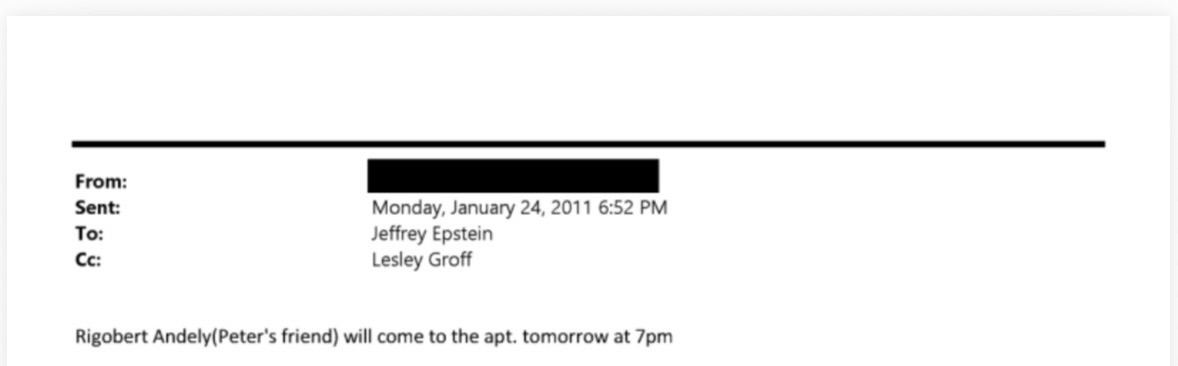
Yet scandals, in the world Andely inhabits, are less endings than interludes. Barely a year later, his name surfaced in a most unlikely archive: the unsealed files of Jeffrey Epstein, the financier whose island retreats and private jets masked a darker empire of exploitation. In emails from 2010 and 2011, Peter Mandelson, the British Labour grandee known as the “Prince of Darkness” for his Machiavellian flair, solicited Epstein’s counsel on aiding his friend Andely in launching a “new bank.” Mandelson, who had weathered his own tempests in Westminster and Brussels, praised Epstein as a financial oracle, “totally trustworthy,” despite the 2008 conviction for soliciting a minor, which should have severed such ties. No accusations cling to Andely in these documents. Still, the association lingers like smoke in a boardroom.

Enter Jean-Yves Ollivier, the French commodities trader who styles himself a peacemaker but whose résumé reads like a Cold War thriller rewritten for the oil age. Ollivier, or “Monsieur Jacques” as he’s known in African capitals, has brokered deals since the 1980s, weaving through apartheid-era sanctions and Congolese oil fields with the agility of an ogre who knows every back channel. His Brazzaville Foundation parades as a beacon of diplomacy (“mediating” in Ukraine, Libya, and beyond), but detractors see it as a glossy veneer for autocrats, a way to launder reputations stained by resource plunder. Ollivier’s alliances, including recent flirtations with Russian interests that have spooked his partners, suggest his “peace” initiatives often dovetail with business prospects. Mandelson admits to fleeting encounters with Ollivier, “three or four times,” he says. Still, their orbits overlap in the gravitational pull of Congo’s president, Denis Sassou Nguesso, a strongman whose rule has been propped up by oil revenues and shadowy fixers.
Epstein’s own dalliances in the resource game add a layer of intrigue. Leaked correspondence reveals him, through former Israeli prime minister Ehud Barak, pitching a $1.6 billion U.S. oil venture to China National Offshore Oil Corporation (CNOOC) in 2014. Earlier, in 2010, Epstein eyed Nigerian crude trades, wary of scams but enticed by potential $6 million windfalls. CNOOC’s maneuvers through Caribbean shells exemplify China’s opaque forays into African hydrocarbons, a strategy that has ensnared nations in debt while enriching elites. This backdrop frames Andely’s improbable ascent: in 2011, mere months after Mandelson’s Epstein entreaty, he was appointed chairman of the Sino-Congolese Bank for Africa (BSCA), a joint venture with China’s Agricultural Bank that ballooned from a 4.12% market share in 2016 to 20.52% by 2023. Fresh from BEAC’s debacle, Andely helmed this institution amid Congo’s deepening Chinese entanglements, culminating in his 2021 negotiation (as finance minister) of a $2.4 billion debt rescheduling with Beijing.
The timing beggars belief. Andely’s return to the finance ministry in 2021-2022 was marked by clashes over oil revenues, pitting him against regime insiders in a nation where transparency is as scarce as unpledged crude. His ouster, some whisper, stemmed from resisting dubious edicts, though cynics view it as mere palace intrigue among kleptocrats. Meanwhile, the oil fields hum with activity. Take SOCO International (now Pharos Energy), whose 2010 half-year report details operations in Congo-Brazzaville’s Marine XI and XIV blocks, where the company secured a one-year extension of its production sharing agreements amid seismic reprocessing and appraisal drilling. Such extensions, in a landscape riddled with insiders like Ollivier, who pocketed $60 million from the adjacent Marine XII sale in 2009 (a presidential election year in Congo Brazzaville, whose outcome was the “victory” of Sassou N’Guesso), raise questions of influence. Ollivier’s windfall, booked through a Lebanese offshore entity, underscores the opacity that shrouds these deals, where “peace” and profit blur into one.
In this web, Andely appears as both architect and arachnid, spinning threads from Epstein’s shadows to China’s Belt and Road ambitions. His story, laced with the irony of a fiscal hawk entangled in graft’s net, illuminates how African elites dance with global predators, often at the expense of their compatriots. As more Epstein files unfurl, one wonders: In the grand bazaar of influence, who truly holds the red pen?